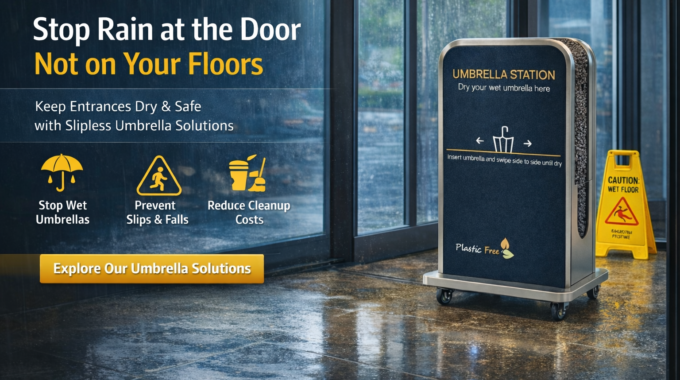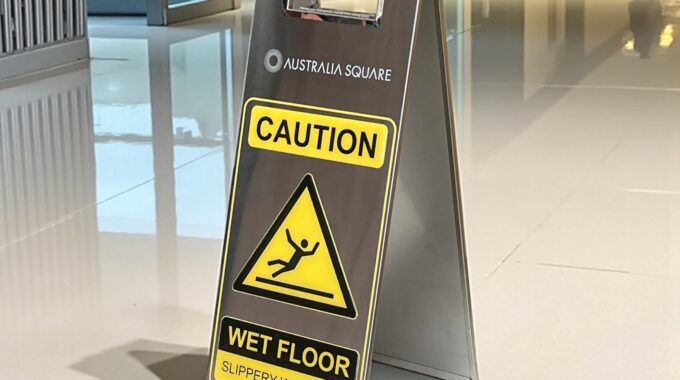
Three zones, a written rain trigger, a 20 minute inspection routine and a ten point checklist, plus the specific playbook for hotels, shopping centres, offices, healthcare and food venues.
Umbrella Stand, Umbrella Bin, Bagging Machine or Dryer? How to Choose Entrance Equipment
There are four ways to deal with a wet umbrella at a commercial entrance, and most buildings pick one by accident. A bucket appears near the door, or a bagging machine gets installed because the building next door has one, and nobody revisits the decision for a decade.
This guide compares the four options, a commercial umbrella stand, an umbrella bin, a wet umbrella bagging machine and an umbrella dryer, against the things that actually decide which one works: how many people come through, how fast they move, what your floor is made of, who empties what, and whether you want a bag in the waste stream.
The four options, briefly
Umbrella stand. A slot style rack where each umbrella gets its own position, sitting over a removable drip tray. The visitor leaves the umbrella and collects it on the way out.
Umbrella bin. A deeper, wider vessel that holds umbrellas loose, usually with a weighted base and a drip tray. Higher capacity, less order.
Wet umbrella bagging machine. A floor standing unit that fits a thin plastic sleeve over the umbrella as the visitor pushes it in and pulls it out. The umbrella stays with the visitor, wrapped.
Umbrella dryer. A unit with internal brushes or absorbent elements that strips water off the umbrella as it passes through, with no bag and no consumable.
The comparison that matters
| Umbrella stand | Umbrella bin | Bagging machine | Umbrella dryer | |
|---|---|---|---|---|
| Umbrella stays with visitor | No | No | Yes | Yes |
| Ongoing consumable | None | None | Bags | None |
| Throughput in a rush | Moderate | High | Moderate | High |
| Staff task created | Empty drip tray | Empty drip tray | Refill bags, empty bag bin | Empty water reservoir |
| Risk of mix ups or loss | Low to moderate | Moderate | None | None |
| Water carried past the door | None | None | Contained in bag | Mostly removed |
| Waste created | None | None | One bag per use | None |
Choosing by building type
Office towers and corporate receptions
Tenants arrive in two tight peaks and everyone is going to the same place: the lift. A stand or bin works well here because people are staying for hours and are happy to leave the umbrella at the door. Capacity is the constraint, not speed, since 300 people can arrive inside twenty minutes. Put the stand before the lift queue, not after it, or the queue forms on wet floor.
Hotels
Guests arrive with luggage and leave for the day in ones and twos, so the umbrella usually belongs to the hotel rather than the guest. A branded stand near concierge is both storage and service. Where the hotel lends umbrellas, a stand with individual slots is far easier to audit at the end of the day than a bin full of them.
Shopping centres and retail
Shoppers will not surrender an umbrella they need again in ten minutes, and nobody wants to queue on the way out. This is bagging machine or dryer territory, because the umbrella stays with the customer. High volume centres often run both, with units at each entrance rather than one central point.
Hospitals, clinics and aged care
The population walking through is the population least able to absorb a fall, and as our review of the national slip and fall data shows, falls on the same level are the single largest category of serious fall claims in Australia. Keeping water off the floor matters more here than anywhere. Dryers avoid the plastic waste that clinical procurement teams increasingly question, and they remove the loose bag that can end up underfoot in a corridor.
Restaurants, cafes and function venues
Space is the scarce resource and the door opens straight into a seated area. A compact stand or bin in the entry alcove usually beats a machine, because there is no room for a queue and diners are staying put for an hour or more.
Government buildings, libraries and education
Long dwell times, public access and a duty to a broad visitor population. Stands or bins at the entry, plus signage while floors are drying, tends to be the practical mix.
The costs people forget
Bags are a running cost and a supply chain. A bagging machine is cheap to install and never stops costing money. Bags arrive in cartons of a thousand, somebody has to store them, refill the unit during the busiest hour of the wettest day, and empty the bin of used ones. If you are weighing this up, our guide to wet umbrella bag types and annual cost works through the numbers for a single entrance.
Drip trays get forgotten. A stand or bin collects water, which means someone has to tip it out. A full tray that is never emptied becomes a spill hazard in its own right, so put the task on the cleaning run, not on goodwill.
Umbrella mix ups are a service problem. Communal bins mean someone will leave with the wrong umbrella, or without theirs. Slot style stands reduce this, as does positioning the stand in the sightline of a reception desk.
Footprint is not free. In a leased retail foyer, floor area has a rent value. A compact unit that fits in an alcove is often the right answer even where a larger one would perform better.
Capacity planning in one calculation
Work out the peak arrivals in your busiest 20 minutes on a wet day, then assume a share of those people are carrying umbrellas. In an office tower with 600 staff, a morning peak might bring 300 people through in twenty minutes, and on a rainy morning a large proportion of them will have an umbrella.
For stands and bins, that number is your capacity requirement, because every umbrella left at the door occupies a slot until its owner leaves. Multiple units spread across the entry usually beat one large one, since they shorten the walk and stop a single queue forming.
For bagging machines and dryers, the number that matters is flow rate rather than capacity. Each visitor takes a few seconds. Two units side by side halve the queue, and a queue of wet people standing on hard floor is the exact situation you are trying to avoid.
What to ask a supplier
- What is it made from, and will it rust? Entry areas are wet by definition, and 304 stainless steel behaves very differently from powder coated mild steel over five years.
- How is the water removed, and by whom? Ask to see the tray or reservoir and how it comes out.
- What is the total five year cost, including consumables, not just the purchase price?
- Can it be branded? An entrance unit is in the first photograph every visitor takes of your lobby.
- What happens at peak? Ask for the practical throughput, not the theoretical one.
Where Slipless fits
Slipless supplies all four categories to Australian businesses. The umbrella stands and holders range includes a slot style commercial umbrella stand and a stainless steel commercial umbrella bin that holds up to 14 umbrellas, both with removable drip trays, plus compact versions for tighter entries. The wet umbrella bagging machines come in single and dual chute formats in stainless steel, powder coated steel and ABS. The wet umbrella dryer range dries the umbrella as the visitor walks it through, with no bags at all, in full size and junior formats and with custom branding.
Frequently asked questions
What is the difference between an umbrella stand and an umbrella bin?
A stand holds each umbrella in its own slot, which keeps the entry tidy and makes it easy to find your own umbrella. A bin holds them loose, which gives higher capacity in the same footprint but makes mix ups more likely. Both should sit over a removable drip tray so the collected water does not end up on the floor.
Is an umbrella dryer better than a bagging machine?
It depends on waste and running costs. A dryer has no consumable, so there is nothing to reorder, refill or dispose of, and nothing to end up on the floor. A bagging machine keeps the umbrella fully contained, which some buildings prefer for carpeted lifts and lobbies. Buildings with sustainability targets usually move toward dryers.
How many umbrellas should a commercial umbrella stand hold?
Size it to your peak 20 minutes on a wet day rather than your daily total. Everyone who leaves an umbrella at the door occupies a slot until they leave the building, so a morning peak in an office tower sets the requirement.
Where should entrance equipment be placed?
Inside the door and before the first queue point, in the visitor’s natural line of travel. Placing it after the lift lobby or reception counter means people have already crossed your floor with a dripping umbrella before they reach it.
The short answer
If visitors stay for hours, take the umbrella off them with a stand or a bin. If they are in and out, keep the umbrella with them and deal with the water using a dryer or a bagging machine. Then check the drip tray is actually on someone’s cleaning round, because that is where most of these systems quietly fail.
Not sure which way to go? Send Slipless your entrance layout and peak numbers and we will size it for you.
Related Posts